

Work with UNC Public Health Students

We are thrilled to host students from University of North Carolina at Chapel Hill’s Gillings School of Global Public Health!
We highly value the passion, skills, care, and eagerness to learn students bring to their work with us and are grateful for their support in expanding our capacity while they gain real-world public health experience.
Food Equity Collaborative’s founder is a professor at UNC and our Executive Director is a UNC Master of Public Health graduate — We are proud to work with and provide valuable learning experiences for public health students.
So far, we have worked with 11 students on 4 projects, including Master of Public Health Capstone and Practicum projects, and an undergraduate internship.
Current Student Work
During the 2026-2027 Academic Year, we are joined by a Capstone team of four second-year MPH students. Their project will explore opportunities to collaborate with other local food organizations, ultimately guiding Food Equity Collaborative’s future plans.
Capstone is a year-long, community-led, group-based, mentored, critical service-learning course where students have the opportunity to synthesize and apply their MPH training to community designed public health projects.
-
A database of organizations working in food access and nutrition programming spaces across Orange and Chatham Counties. This deliverable will inform the rest of the Capstone project and serve as a general resource for FEC’s partnership development.
-
In preparation for the project’s primary activity, this deliverable will result in interview and focus group guides to support engagement with and learning from organizations identified in the Landscape Scan.
-
After completing interviews and focus groups, students will analyze their data to understand the current capacity of participating organizations, what types of support would be valuable to their organization, and where collaborative opportunities may exist.
-
This final deliverable will synthesize findings from all previous work by identifying gaps between existing food access and nutrition resources, organizational capacity, and community needs. Students will translate their analysis into actionable, evidence-based recommendations for FEC.
Additionally, we are grateful to continue working with a student who completed their Summer 2026 Practicum with FEC. She will continue developing Kidtrition, an upcoming program aiming to bring nutrition education to early care centers.
Meet the Capstone Team
-
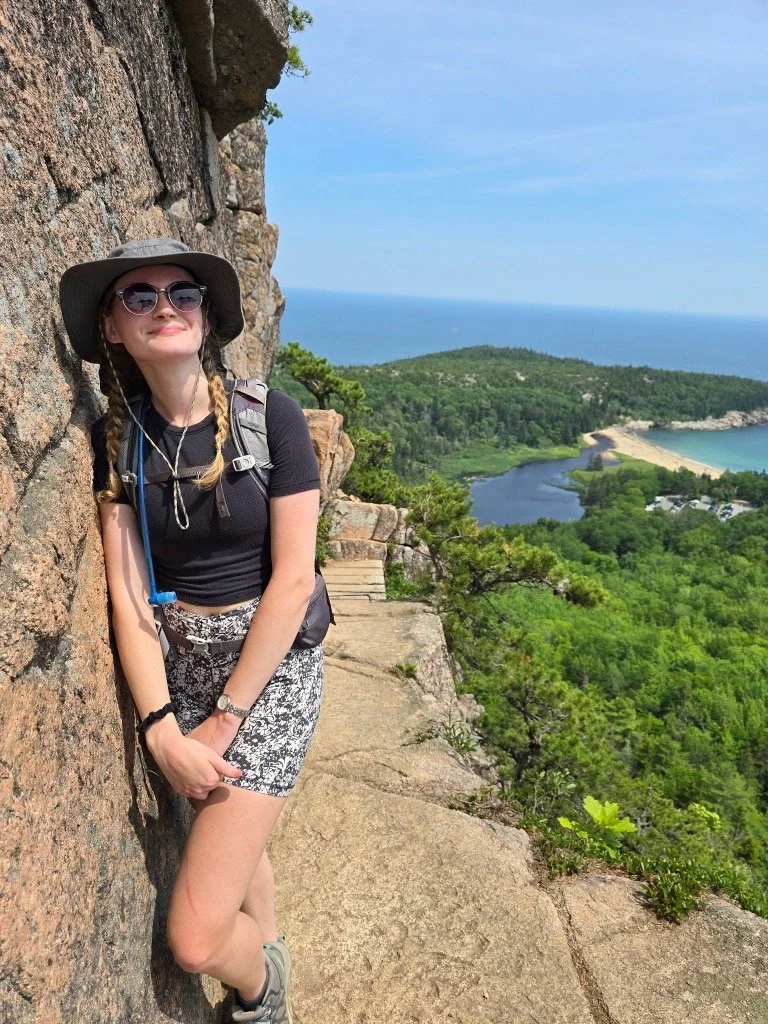
Allison Britt (she/her)
Health Behavior concentration
Allison has a bachelor's degree in psychology from NC State University and is currently earning a Master of Public Health (MPH), concentrating in Health Behavior, at UNC-Chapel Hill. Allison has worked in clinical trial research for the past six years on studies focused on improving the lives of individuals living with severe mental illness, including schizophrenia, and PTSD. Allison is most excited about joining FEC to learn more about how local food systems operate and how food security, access, and education can influence mental health outcomes.
-

Maya Saterson (she/her)
Health Equity and Social Justice concentration
Maya holds a B.A. from Middlebury College where she studied environmental science and psychology, conducting research on environmental decision making and behavior. Since graduating, Maya has worked in energy efficiency with different utilities and program administrators across the United States and Canada. In this work, Maya aims to support participation of all customers in energy programs using behavioral strategies and emphasizing co-benefits to make sure energy efficiency programs are fully valued beyond just energy savings. In her free time, Maya enjoys running, baking, and spending time with friends and family.
-
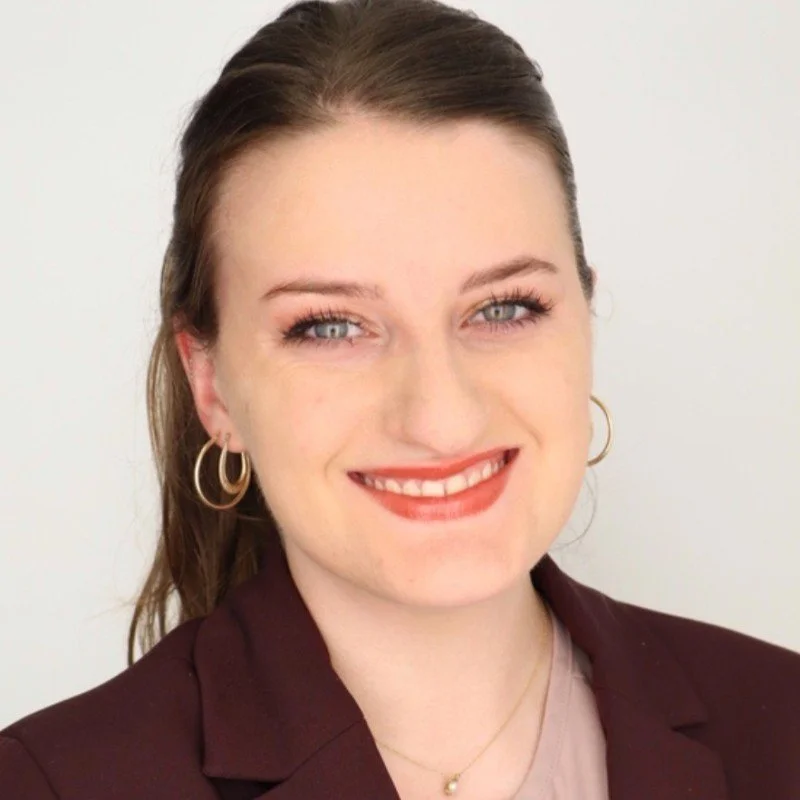
Abigail Holdsclaw (she/her)
Health Behavior concentration
Abigail Holdsclaw is the Lead Community-Based Researcher for ncIMPACT at the UNC-Chapel Hill School of Government. She supports the organization’s work to form and sustain reciprocal partnerships with community partners across North Carolina to improve their capacity to respond to self-identified challenges through co-designed research, technical assistance, evaluation, and continuous quality improvement.
Her career has been marked by a focus on cross-sector collaboration and leading interdisciplinary teams that spanned state agencies, local governments, educational institutions, local public health departments, workforce development boards, nonprofits, and others. Through providing technical assistance, training, and forming trusting relationships with diverse stakeholders across the state, she has supported more than 30 teams spanning more than 60 counties in program implementation, adaptation, and evaluation efforts across focuses such as youth workforce participation, youth behavioral health, and rural pharmacy access.
Abigail holds a Bachelor of Arts in Public Policy and Interdisciplinary Studies from the University of North Carolina at Chapel Hill. Abigail is in the final year of her studies at a Health Behavior student at the UNC-CH Gillings School of Global Public Health.
-

Kate McCarthy (she/her)
Health Equity and Social Justice concentration
Kate has a dual B.S. in Psychology and Human Development with a minor in peace studies and social justice from Virginia Tech. She is currently pursuing a dual MSW and MPH at UNC Chapel Hill, focused on health equity and social justice. She grew up in Raleigh, NC, and now lives in Durham. Kate is very interested in social work and public health practice that focuses on addressing social determinants of health, including housing, healthcare, a clean environment, and healthy food. Kate currently works on a farm in Pittsboro that serves individuals with serious and persistent mental illness, where daily therapeutic, creative, life-skills, recovery-focused, and nature-based programs take place. The farm itself grows and harvests food weekly that is either cooked and served to participants on the Farm, or donated to clinics in Orange and Chatham counties. She believes that access to healthy, affordable food is a universal right for all people, and is a strong prevention for disease. Kate sees herself as a lifelong learner and strives to practice humility, empathy, and curiosity in each space she finds herself in. Kate is so excited to be working with FEC this year to learn more about the unique strengths of community organizations that are centered around food access in Orange and Chatham counties!
Past Student Work
Food Equity Collaborative began hosting students in 2025. Click below to learn more about their projects.
Thank you to all students who have completed work with us!
-
During Summer 2026, we hosted a team of two MPH students between their first and second years for their Practicum. Their project supported foundational research for Kidtrition, an upcoming program working to bring nutrition education to early care centers.
Practicum is a minimum 200‑hour, planned, mentored, and evaluated applied practice experience in a professional public health setting, designed to apply their MPH training in real‑world work.
» Learn more about Summer 2026 work and meet the students. (Link coming soon)
-
During Summer 2026, an undergraduate student completed a remote internship to support and expand our online resources. See her work in action:
Mini Food Guides (Coming soon)
Monday’s Meals - Community Sourced Recipes (Coming soon)
» Learn more about Summer 2026 work and meet the students. (Link coming soon)
-
During the 2025-2026 Academic Year, FEC hosted its first team of students. Our Capstone team of four second-year MPH students supported our work by evaluating how Good Bowls affect the wellbeing of local communities and the local food economy, and by developing tools and resources to help FEC expand their reach and effectiveness.

2025-2026 Capstone Team
Left to right: Thea (student), Tori (staff, preceptor), Sophie (staff), Sabina (student), Meredith (student), and Alice (founder); not pictured, Mei (student)